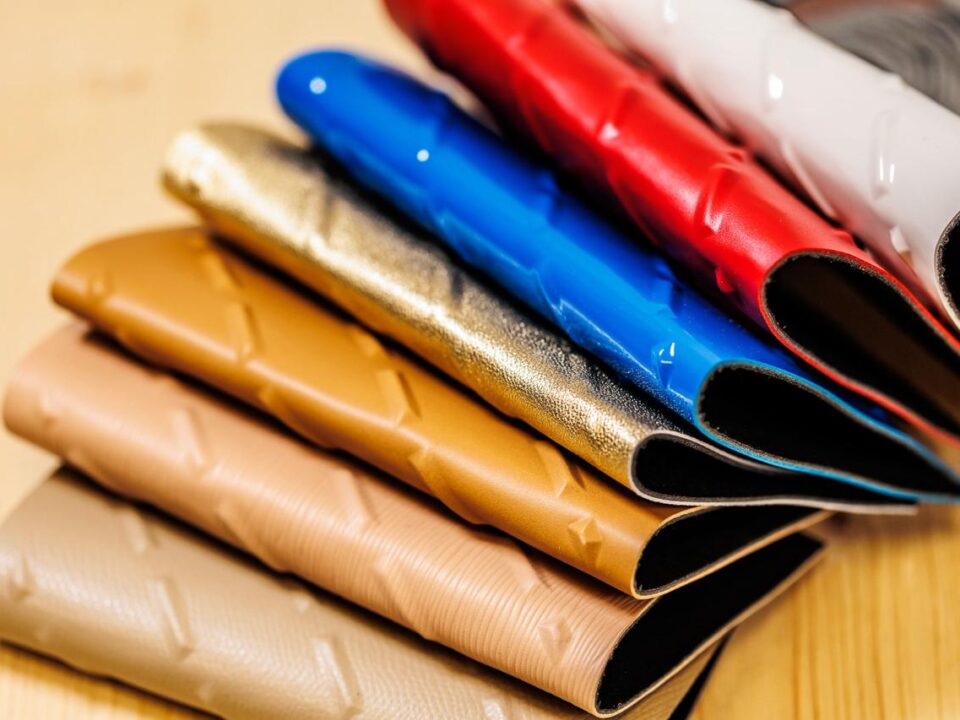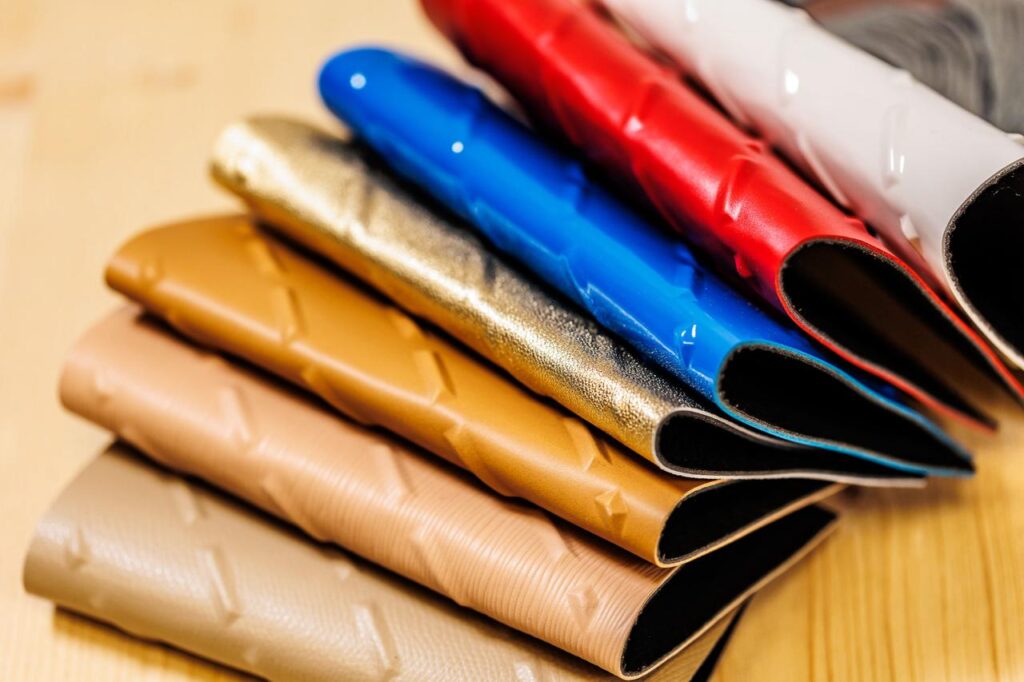

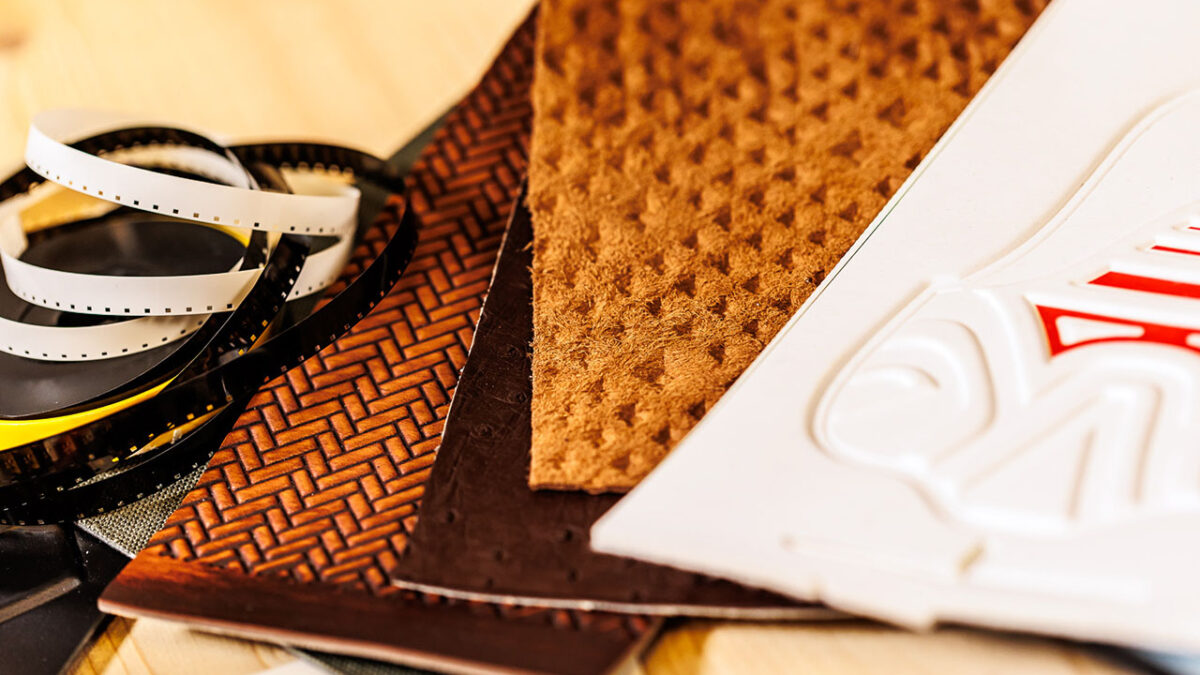
The fashion and technical industry markets are increasingly investing in vegan materials and innovative synthetic materials, designed to ensure high performance, sustainability, and new aesthetic possibilities. However, before integrating them into production processes, it is essential to verify their compatibility with high frequency processing.
Many innovative fabrics, such as advanced polyurethanes (PU), technical microfibers, and vegan solutions, offer excellent performance in terms of durability and aesthetics, but react differently than traditional materials when subjected to high-frequency welding .
For this reason, preliminary testing and workability trials are essential to ensure reliable, long-lasting results that meet the quality standards required in the fashion, technical accessories, and industrial components sectors.
New and innovative synthetic materials: what they are and why they are renovating the market
Among the most sought-after innovative synthetic materials are:
- Eco-friendly vegan materials;
- Eco-friendly leathers made from plant waste;
- Bio-based fabrics;
- Highlysoft microfibers;
- Innovative PU;
- Non-woven fabrics;
- Coupledmaterials(leather+ synthetic).
These innovative synthetic materials are chosen for their lightness, comfort, and high aesthetic quality. In the fashion, orthopedics, safety and footwear sectors, the search for innovative fabrics that combine sustainability and performance is constantly growing, and for this reason, they are increasingly investing in these solutions.
Can vegan materials be welded using high frequency?
The answer is yes, but not automatically.
High frequency welding is a cold-welding process that uses an electromagnetic field to modify the molecules within the material. This allows for the joining of even coupled materials, embossing/debossing, and eliminating the risk of damaging the material. This allows for:
- permanentanddurable joints;
- precise three-dimensional effects (embossing and debossing);
- cleanandinvisible welds;
- rapid production
When discussing vegan or bio-based materials, however, it is necessary to carefully evaluate:
- thermal response;
- surface stability;
- thestrengthofthecouplingor welding;
- mechanical resistance over
Only a technical test can confirm true compatibility with high frequency.
Are PU and microfibers suitable for high-frequency processing?
Polyurethane (PU) and microfibers today represent one of the main categories of innovative synthetic materials used in the production of shoe uppers, fashion accessories, orthopedic devices and technical components.
Many of these materials are perfectly suitable for high-frequency processing, but the result depends on:
- thickness;
- chemical composition;
- presenceofcoupled layers;
- elasticityofthe material;
Preliminary testing allows us to define correct parameters and ensure stable processing, especially when using
innovative, highly soft fabrics.
Welding and Strength Testing on Coupled Materials
In the case of coupled materials, such as leather and synthetics or combinations of microfiber and technical, the tests must be even more thorough.
It’s not just the aesthetics that are evaluated. We analyze:
- Coupling strength;
- Relief stability;
- Cutting quality;
- Mechanical strength over
This is an essential step for subcontractors who work with vegan materials, innovative synthetic materials, and
innovative fabrics on behalf of fashion brands or technical companies, ensuring reliability and high standards.
Why is high frequency ideal for soft, innovative, and bio-based materials?
The current trend favors soft, lightweight, and comfortable materials.
High frequency allows for the processing of innovative fabrics and soft surfaces while maintaining:
- precisionin detail;
- clean aesthetics;
- defined three-dimensionality.
Furthermore, compared to traditional techniques, high frequency processing:
- doesnotrequire glue;
- reduces material waste;
- improves production.
This makes it particularly consistent with the evolution towards vegan materials and sustainable solutions.
Processing vegan materials and innovative fabrics with high frequency: a competitive advantage
Processing vegan materials, innovative fabrics, and innovative synthetic materials with high frequency today represents a concrete competitive advantage.
Those who can test and validate new materials can:
- expandtheirproduct offering;
- collaboratewithR&Danddesign departments;
- positionthemselvesasareliablepartnerintheluxuryandtechnical.
Want to test a new material?
If you’re considering using vegan materials, advanced microfibers, innovative PUs, or bio-based fabrics, the first step is to verify their high-frequency processability.
Contact Bizeta to initiate a personalized testing phase and identify the technical solution best suited to your production needs. Our collaborators will help you conduct processing tests on the materials and identify the best performing technical solution, supporting you every step of the way.